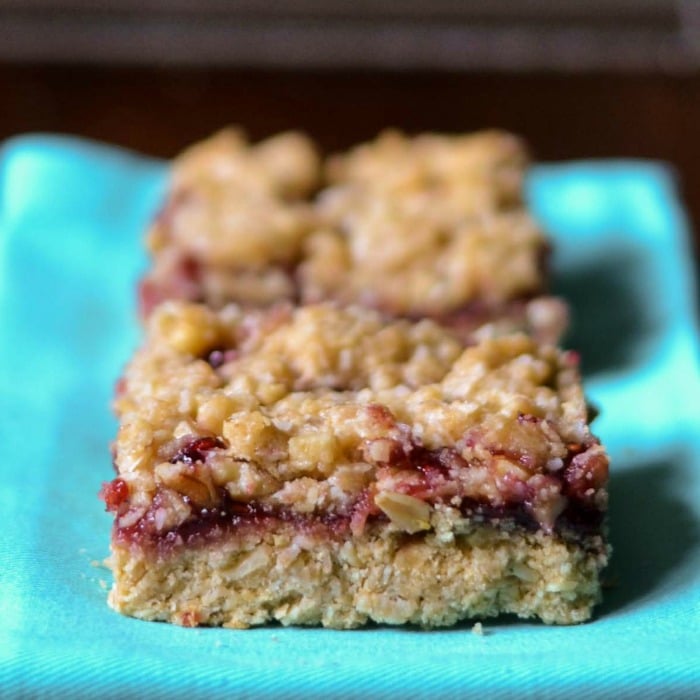
Peach Maple Cake

This is a delicious summer dessert that takes advantage of fresh peaches.  Adapted from this recipe by Martha Stewart, my version is sweetened by maple syrup, which gives it a wonderful flavor.  The only problem with this cake is that it’s too small.  It can disappear within minutes of coming out of the oven.  Not that I’ve eaten the whole thing myself. . .

Ingredients:
1¼ cups white whole wheat flour
1 tsp. baking powder
½ tsp. salt
½ cup melted ghee or butter
½ cup maple syrup + 1 tbs. maple syrup
2 eggs
1 tsp. vanilla extract
4 cups chopped peaches
½ tsp. cinnamon

  1. Grease a 9-inch square pan and preheat the oven to 350 degrees.
  2. Submerge the peaches in boiling water for 30 seconds, and then place the peaches in a bowl of cold water.  When cool, you can easily remove the skin from the peaches.
  3. Combine the dry ingredients in a small bowl and set aside.
  4. Stir together the ghee, ½ cup maple syrup, eggs, and vanilla in a large bowl.  Add the dry ingredients and mix until combined.
  5. Fold in the chopped peaches.
  6. Transfer the mixture to the prepared pan.  In a small bowl, mix the remaining maple syrup with the cinnamon.  Drizzle over the cake.
  7. Bake for 45 minutes, or until a toothpick inserted in the center comes out clean.
  8. Cool the cake on a wire rack, then cut it into 9 square pieces.

Price Breakdown
This cake costs $4.50 to make, or $.50 per serving.  It’s a wonderful way to use peaches when they’re in season, and it can also be made with frozen peaches if you have the will power to freeze some during the summer.

Reminder: If you’re interested in learning how to save money on healthy groceries, enter my giveaway for a free copy of Your Grocery Budget Toolbox.

Linking to Make Your Own Monday, Melt in Your Mouth Monday, Totally Tasty Tuesday, Fight Back Friday, Fresh Bites Friday.

Your Grocery Budget Toolbox Review and Giveaway

Ten years ago, I ate a Nutri-Grain bar every day.  I am someone who is hungry all day long (thus the food blog), and Nutri-Grain bars were my mid-morning snack.  Sometimes I would have another one later in the afternoon if I just couldn’t make it until dinner.  I was vaguely trying to be healthy, and I thought these bars fit the bill. “Nutri” is short for nutrition, and “grain” is good, right?  Those marketing folks knew how to get my attention.  I bought several boxes at a time when they were on sale, although I wasn’t a coupon clipper back them.  I shudder to think how many hundreds of dollars I spent on those bars over the years. I will never forget the moment, after years of this daily habit, when I looked at the ingredient list and I realized that I was actually eating the equivalent of a Pop-Tart.  Every day.  For years.  And I was trying to be healthy.  That realization was the start of my critical look at my grocery cart.

Over the past few years, I’ve swapped out highly processed foods for the homemade versions.  I’m always looking for ways to make healthy eating more affordable, so I was happy to have the opportunity to read and review fellow blogger Anne Simpson’s e-book, Your Grocery Budget Toolbox.  If you’re interested in striking the balance between staying within a reasonable grocery budget and eating the healthiest food possible, then this is the book for you.  I enjoyed the book very much, and even though I’ve been focusing on this topic for years, I learned quite a few things from it.

For me, the highlight of the book is her detailed account of how to establish a grocery budget.  Budgeting can be tricky for people who want to eat the highest quality food, but it’s necessary if you don’t want to over-spend on groceries.  Simpson is a believer in the “Once a Month Shopping” concept, which means that she does about 70 percent of her grocery shopping once a month.  This leaves a small portion of her budget for perishables such as produce, and she goes out once a week to pick up a few things that didn’t make it into her cart during the big shopping trip.  As someone who goes grocery shopping more than once a week, I’m intrigued by the idea of planning a monthly menu and doing most of my shopping all in one shot.

The book includes a practical application at the end of each section so readers can apply her ideas to their own situations.  For example, in the section about how to put together a grocery budget, Anne breaks down the different categories of food and gives a suggested percentage for how much money each category should take.  She then asks readers to determine their nutritional priorities and plan their budgets accordingly.  Here is my response to this challenge:

  1. Produce:  This is my top priority, because no matter how much I focus on produce for my family, I still feel like we’re not eating enough.
  2. Grains:  We’ve been transitioning to 100 percent whole grains in our diet, and I want to focus on bringing home a good variety of whole grains.
  3. Fats:  We are using butter, ghee, coconut oil, and olive oil as our sources of fat for cooking and baking.  It would be nice to move to higher quality butter at some point, but for now I’m sticking to what’s on sale.
  4. Sweeteners:  I do a lot of baking, and I use maple syrup, honey, and mashed fruit as my sweeteners.  As you might expect, this approach is more expensive than white sugar, but the price breakdowns in my recipes show that it’s actually not that much more expensive given the small amounts of sweetener I tend to use.
  5. Meat:  We’re contemplating joining a meat CSA, which costs $8.80 per pound.  The cost gives me pause, but I’d love to be able to serve exclusively high-quality, local, grass-fed meat to my family.
  6. Dairy:  I don’t eat much dairy, and the rest of my family gets whatever is on sale.  It would be nice to buy organic dairy products, but it’s not in the budget at the moment.  I have enjoyed switching to homemade Greek yogurt, which tastes so good and costs much less than the store-bought version.
  7. Everything Else:  Spices and other miscellaneous items are at the bottom of my list of nutritional priorities.

The Grocery Budget Toolbox includes lots of tips for how to save money on healthy groceries.  Writing a price book can help you to keep track of the typical prices of the items you regularly buy (see mine here).  She details the many sources of coupons, affordable grocery websites, and internet savings techniques that are out there.  She even includes recipes for food items that are much more affordable when you make them yourself.  I was excited to learn that I can make my own apple cider vinegar from apple peels, and that there are lots of ways to use coffee grounds once they’re done making your coffee!

This book is an excellent resource for someone starting out on their money-saving journey, but it’s also full of great tips for veterans of frugal living.  I think it’s a bargain at $4.99.  If you’re interested in buying a copy, Anne is offering a 20 percent discount with coupon code realdeal.  This code will be available until Sunday, August 5th.  She has also generously offered to give away one copy of Your Grocery Budget Toolbox in conjunction with this review.  If you buy the book and then you’re lucky enough to win the giveaway, she will refund the purchase price.

Giveaway Details

Trust me – you want to read this book.  There are so many great tips for making your grocery shopping more efficient and cost-effective.  To enter the giveaway, you may do any or all of the following:

Make a separate comment below for each action you take from the list above.  If you are already following my blog or Anne’s blog in any of the ways listed above, leave a separate comment for each one so you can get multiple entries.  The giveaway will end on Friday, August 3 at 12:00 p.m. Eastern Time.

Disclosure: I received a free copy of the book for this review, but all of the opinions are mine.

Linking to Monday Mania, Thursday Giveaway Link Up.

Fresh Corn Salsa

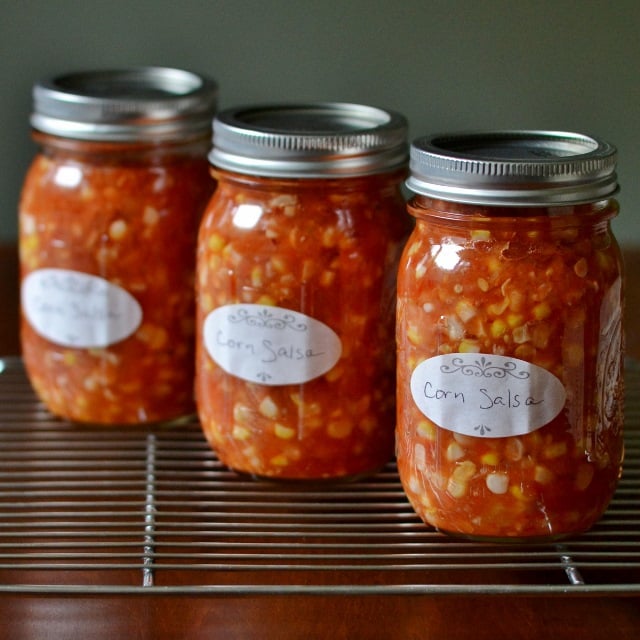
corn salsa rfrd

I dream of a pantry filled with jars of homemade jams and salsa, at least 30 jars of each.  That dream is a little far away right now, but I do have a few jars of jam on the shelf.  This recipe is my first step toward filling the salsa shelf.  My husband’s aunt makes amazing homemade pineapple salsa, which I will be trying to replicate one of these days.  But for now, this fresh corn salsa will do.  I adapted this recipe from a corn salsa in Better Homes and Gardens’ Can It cookbook, and it’s the perfect match for what I got from my farm share this week.  I think it’s absolutely delicious – tart from the lime, sweet from the corn, and just the right amount of spice.  It will take great restraint for me to leave these jars in the cabinet past next week.  The salsa is wonderful on its own, but you could also mix it with a mashed avocado for a quick, flavorful guacamole.

Ingredients:
4 ears of non-GMO corn
2 medium tomatoes, skin removed
1 jalapeno pepper
1 onion
1 green or red pepper
½ cup lime juice
½ tsp. salt
½ tsp. cumin

  1. Cut the corn kernels off the ears.
  2. Submerge the tomatoes in boiling water for 30 seconds, and then place them in a bowl of cold water.  Remove the skins.
  3. Cut the jalapeno pepper in half and discard the seeds.  Chop the jalapeno finely in a food processor.
  4. Add the onion, pepper, and tomatoes to the food processor and chop coarsely.
  5. Place all the ingredients in a large pot.  Simmer for 10 minutes with the top partly covering the pot.
  6. Transfer the mixture to 4 hot, sterilized half-pint jars, leaving ½ inch headspace.  Process in a water bath for 15 minutes, and then let the jars cool on a wire rack.

Price Breakdown
The total cost of this salsa is $4.39, or $1.10 per half-pint jar.  Most of the ingredients I used are organic, so this is a great price.  And the taste is much better than what you can buy in the store.

Linking to Wellness Weekend, Healthy Vegan Friday, Show and Tell Saturday, My Meatless Mondays, Frugal Tip Tuesday, Real Food Wednesday, Gluten-Free Wednesday, Allergy-Free Wednesday, What’s in the Box?, Simple Lives Thursday, Keep it Real Thursday, Frugal Fridays.

Free Pound of Organic Tomatoes at Earth Fare

I don’t live near an Earth Fare, but if I did, I’d be lining up with this coupon in hand.  You can get a free pound of organic tomatoes between July 25 and July 29 with any $5 purchase.  All you need to do is vote for your favorite picture in their “Take Your Tomato Contest” and you will receive the coupon.

Click here for details.

Thanks, Food Allergies on a Budget!

Salmon with Raspberry Lime Sauce


We love to eat salmon, but our children are getting tired of the maple soy glaze that we typically use.  When they started groaning the last time I bought salmon, I came up with this raspberry lime sauce to mix things up.  Everyone loved it.

Ingredients:
1 lb. salmon
½ tbs. olive oil
1½ tbs. raspberry jam
1 tbs. lime juice
½ tbs. vinegar

  1. Preheat the oven to 400 degrees.
  2. Brush the salmon with olive oil and place it in a 9-inch baking dish.
  3. Cook the salmon for 20 minutes.
  4. While the salmon is in the oven, combine the jam, lime juice, and vinegar in a small saucepan.  Simmer gently for about 2 minutes.  Serve warm on top of the salmon.

Price Breakdown
This meal costs $9.46 to make, or $2.37 per 4 ounce serving.  It’s a great, healthy way to serve salmon, and the jam may even convert your picky eater into a salmon fan.

Linking to Allergy-Free Wednesday, Gluten-Free Wednesday, Whole Foods Wednesday.

Easy Real Food Pickles

Back in April, my kids and I picked out a few types of seeds to plant in the very limited “sunny spot” in our yard.  My daughter picked two kinds of flowers, while my son and I picked out veggies.  He chose pumpkins and carrots, while I picked cucumbers and basil.  The basil looks a little sad because some critters have been chewing on the leaves, and the carrots are coming along.  The cucumbers and pumpkins have grown into a crazy bramble of leaves and vines.  I actually thought it was all pumpkin, but then I was poking around the other day and I discovered an 8-inch, fully ripe cucumber in the midst of it all.  We like our pickles around here, so I was a happy lady!

Here is a simple, real food recipe for pickles.  My husband likes sweet pickles, but I wasn’t willing to make them with loads of sugar like I’ve done in the past.  This batch has some honey, along with lots of vinegar and some seasonings (adapted from this recipe from Whole Foods).  It passes everyone’s pickle test in my house, which is quite a feat.

Ingredients:
4 cucumbers (6 inches each)
2/3 cup honey
½ cup white vinegar
1 cup cider vinegar
4 tsp. kosher salt
2 tsp. celery seed
¼ tsp. mustard powder

  1. Sterilize 3 pint jars in boiling water or in the dishwasher (see here for details about sterilizing).
  2. Slice the cucumbers ¼ inch or smaller with a mandolin and divide them among the jars.
  3. In a small saucepan, stir together the remaining ingredients and simmer them over medium heat for 2-3 minutes.
  4. Pour the mixture over the cucumbers in the jars (1/3 in each jar).  Proceed with canning or refrigerate.

Price Breakdown
Using cucumbers from my garden, the total cost of this recipe is $2.90, or $.97 per pint of pickles.  This is a great price for high-quality, real food pickles, and it’s a great way to stock up when the cucumbers are plentiful in your garden.

Free Canning Book and Slow Cooker Cookbook for Kindle

Amazon is constantly offering free books for Kindle owners.  Today, you can download a free canning book and a slow cooker cookbook.  I haven’t read either one yet, but for this price, I’ve got nothing to lose!

Click here to go to the canning book on Amazon.

Click here for the slow cooker cookbook.

To find dozens of free Kindle books every day, you can “like” the following Facebook pages and you will get notifications of free titles in your Facebook news feed:

  • Pixel of Ink
  • Pixel of Ink – Young Edition
  • Ereader News Today
  • Kindle Fire
  • Amazon Kindle
 Thanks for today’s free books, Nourishing Treasures!

Peaches and Cream

I like to keep it simple around here.  And on nights when my husband isn’t home for dinner, our meal is often beyond simple – as in dull and uninspired.  Tonight I served whole wheat spaghetti with pizza sauce and corn on the cob to the children, while I ate zucchini spaghetti (I can’t get enough of this stuff).  I knew there might be some complaints from the peanut gallery, so I headed them off with the promise of dessert.  My son had mentioned that some of the peaches I bought yesterday were ripe, so I put together peaches and cream for dessert.  The children were impressed by the “fancy” presentation and they enjoyed this easy little treat.

Ingredients:
12 ounces ripe peaches (about 2)
1/2 cup heavy cream
2 tsp. maple syrup

  1. Chop the peaches into bite-sized pieces.
  2. Combine the cream with the maple syrup and whip it until stiff peaks form.
  3. Top the peaches with the cream, preferably in small glasses or glass bowls.  Garnish with a few pieces of peach.  Enjoy!

Price breakdown
This recipe costs a total of $1.48, or $.49 per serving.  It’s a simple treat that you don’t want to miss when peaches are in season!

Linking to Monday Mania, Make Your Own Monday, Traditional Tuesday, Fat Tuesday.

Peach Coconut Cream Sorbet

Early in the spring, I got the idea of peach sorbet in my head.  Peaches are one of my favorite fruits, and there’s nothing like a refreshing sorbet on a summer evening.  But it was early spring, so I knew I had to wait.  I waited patiently, as I do every summer, until peaches hit $.99 a pound at the grocery store.  This is when I pounce.  Peach sorbet, peach buckle, peach crisp, or just a plain old peach for a snack – these treats overwhelm our house for the month when the peach price dips to $.99 a pound.  My family gets sick of peaches by the end of it all – everyone except me, that is.  I could keep going well into the fall.  Peach salsa, peach bread, peach butter, peach anything, no?

Aside from the peaches in my raspberry jam and some plain peaches for a snack, this was our first real peach dessert this summer.  It’s not very sweet like a pre-packaged sorbet you would buy, but it’s very peachy, and the coconut cream gives it a great consistency.  I love the idea of keeping the skin on the peaches (thanks to Lisa at 100 Days of Real Food).  It’s much easier to skip the peeling step, and the darker color of the skin beautifully dots the final product.

Ingredients:
1 ½ lb. peaches (about 4)
½ cup coconut cream (this is the thick cream at the top of a can of full-fat coconut milk)
1/3 cup maple syrup
1 tbs. lime juice

  1. Pit the peaches and puree them in a food processor.
  2. Add the coconut cream, maple syrup, and lime juice, and mix in the food processor briefly to combine the flavors.  Taste it to see if you want to add a little more syrup.
  3. If you have an ice cream maker, churn the sorbet according to the manufacturer’s instructions, and then place it in an airtight container in the freezer for a couple hours to let the sorbet solidify.  I use the KitchenAid Ice Cream Maker Attachment.
  4. If you don’t have an ice cream maker, just put the sorbet directly from the food processor into the freezer.

Price Breakdown
This recipe costs $2.98 to make, or $.50 per ½ cup serving.  Making sorbet with sugar instead of maple syrup would bring the price down a bit, but this real food version is still a great bargain.

Linking to Real Food Wednesday, Whole Foods Wednesday, Allergy-Free Wednesday, Gluten-Free Wednesday, What’s in the Box?, Wellness Weekend, Fresh Bites FridayFarm Girl Friday, Fit and Fabulous Friday, Show and Tell Saturday.

This post contains an affiliate link.

Related Posts Plugin for WordPress, Blogger...